
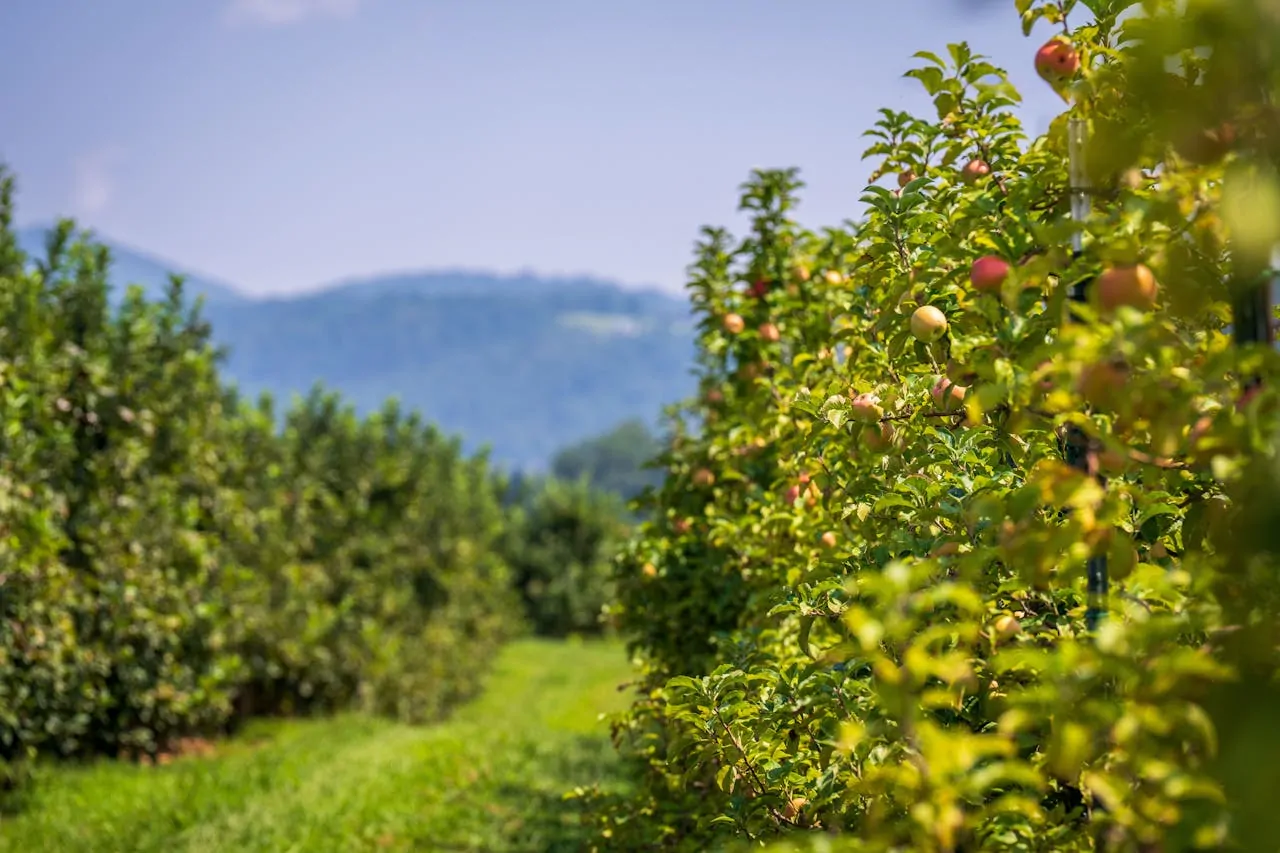
In Boise, spring makes growth visible everywhere. The foothills turn green. Trees fill out almost overnight. Yards wake up. Irrigation water starts moving again. Construction sites come back to life. The whole valley seems to enter a season of expansion.
It is easy to see all that growth and assume it means strength. But anyone who has cared for a fruit tree knows that more is not always healthier. A tree can look strongest right before it needs to be pruned. Its branches spread in every direction. The canopy thickens. It fills space and gives the impression of abundance.
The pruner sees something else. Too much growth can weaken the tree. Branches compete for light. Air cannot move through the center. Energy gets spent on sucker growth, those thin shoots that look alive but bear little fruit. The tree is busy feeding parts of itself that will never carry the harvest.
So the pruner cuts. Living wood is removed. The tree becomes smaller in order to become more capable. Light reaches the interior. The center opens. Energy returns to the branches that can actually bear. The cut is loyalty to the fruit.
A tree has only so much energy to give. When that energy is spread across too many branches, the whole organism weakens. Abundance needs shape before it can become strength.
The same thing happens in the brain. Early life is full of branching. Children are absorbing language, movement, emotion, social cues, fears, habits, stories, and patterns of attention. The brain builds widely because it has to explore the world before it can specialize. During adolescence, that open field begins to narrow. Connections used often are strengthened. Connections used less often begin to fade. This process, called synaptic pruning, helps the brain use its energy more efficiently. The result is a mind that can focus, choose, and act with greater stability.
The brain grows up by becoming more focused. Cities need the same wisdom. Public life now absorbs more than it can sort. More platforms, more meetings, more initiatives, more campaigns, more trends, more noise. Every week brings another issue demanding total attention. Every controversy presents itself as urgent. Every new idea asks to be treated as permanent.
A city that takes everything in without discernment becomes overgrown. Its attention fragments. Its standards blur. Public life fills with weak branches competing for light. This is how growth turns into thicket. Boise is growing; that much is obvious. New buildings, new residents, new money, new pressure, new ambition. The harder question is whether all of that growth is being shaped into maturity. A mature city does more than add. It learns what to strengthen, what to make room for, and what to stop feeding.
A mature city has to decide what it keeps bringing forward. Some things deserve protection, funding, design attention, and institutional support because they help the place become stronger. Other things need to lose their place over time because they do not carry enough value to keep receiving attention. That is how a culture forms. It is shaped by what a city keeps choosing, and by what it gradually stops rewarding.
This is where the work becomes uncomfortable. Pruning requires judgment. Loud things are not always important. New things are not always worth carrying forward. Profitable things are not always healthy. Convenient things are not always wise. A city that gives equal energy to every impulse eventually loses the ability to form a clear character. That is stewardship.
Every city prunes, whether it admits it or not. Zoning, budgets, building codes, transportation priorities, school calendars, public art, media attention, institutional partnerships, and ordinary social reward all decide what receives life and what dims. A city teaches through what it praises, what it ignores, what it makes easy, and what it makes nearly impossible. The question is whether those choices are made with judgment or left to accident.
When a city refuses to practice discernment consciously, the easiest forms of attention usually take over. Speed becomes more attractive than durability. Cheapness gets mistaken for practicality. Outrage receives more energy than deliberation. Novelty crowds out memory. Over time, the culture fills with signals that are loud enough to dominate the moment but too flimsy to deserve endurance.
This is how a place can grow larger and still feel weaker. Buildings multiply without creating a stronger city. Events fill the calendar without forming a deeper culture. Dialogue expands without producing wisdom. Participation increases without becoming responsibility. Without form, more becomes weight.
The better question is what Boise is willing to stop reinforcing. Some patterns deserve less attention than they currently receive: development that treats the human nervous system as an afterthought, public spaces that need constant programming because their physical form carries no life, civic language that flatters everyone while asking little of anyone, and systems that reward short-term extraction while calling it growth. A city also has to become more disciplined about attention itself. Every passing controversy cannot be allowed to feel more real than the long work of building a place worthy of love.
Pruning still requires humility. A city is too complex to be shaped by blunt force or abstract certainty. The pruner has to understand the living form in front of him: which branches carry strength, where the center needs light, where growth is crowding itself, and what kind of fruit the whole tree is capable of bearing. Careless cutting wounds the tree. Fearful neglect weakens it over time. Good pruning begins with clear seeing.
Boise has reached the point where growth needs a clearer shape. The city can keep expanding, but expansion alone will not give it character. It needs stronger branches, clearer openings, better light, and a deeper understanding of what all this growth is meant to serve. Attention, trust, beauty, and time are civic resources. They can be wasted. They can be crowded out. They can also be protected.
A city matures when it learns what to stop reinforcing. Boise has plenty of visible growth. The harder work now is learning how to shape it.
