
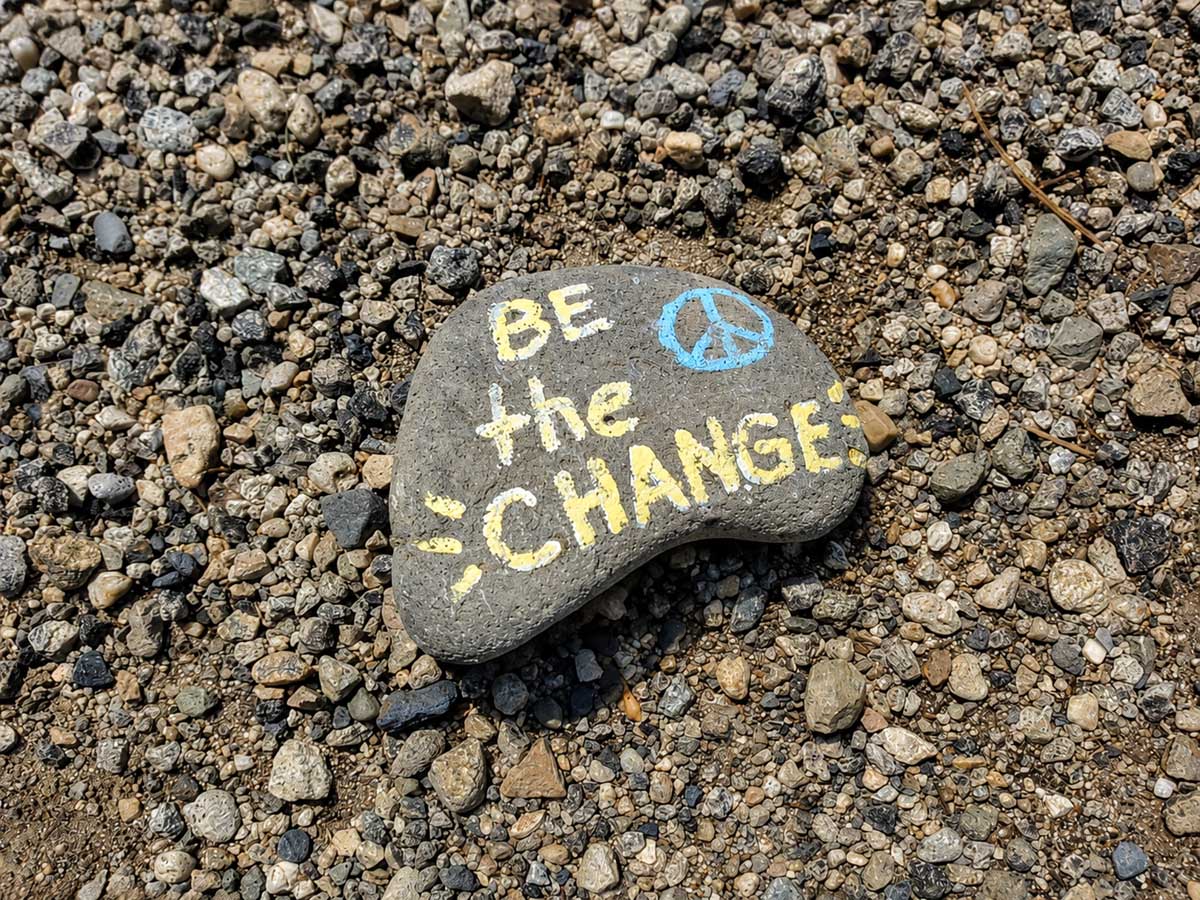
Spend enough time walking around Boise, and you start to notice the messages.
They show up along the Greenbelt, under bridges, on trail edges, and on rocks left near benches. Most are easy to miss. A few words in chalk. A phrase on a railing. A painted stone set where someone else might see it. Many of them say some version of the same thing: You matter. Stay kind. Keep going.
When public surfaces get marked, the writing usually looks familiar. In most places it is a name, a date, a political line, an obscene joke, or a standard tag. Boise has those marks too. But here, there is another kind of message that shows up often enough to notice. Alongside the usual vandalism, there are small messages that seem to be trying to help the next person get through the day.
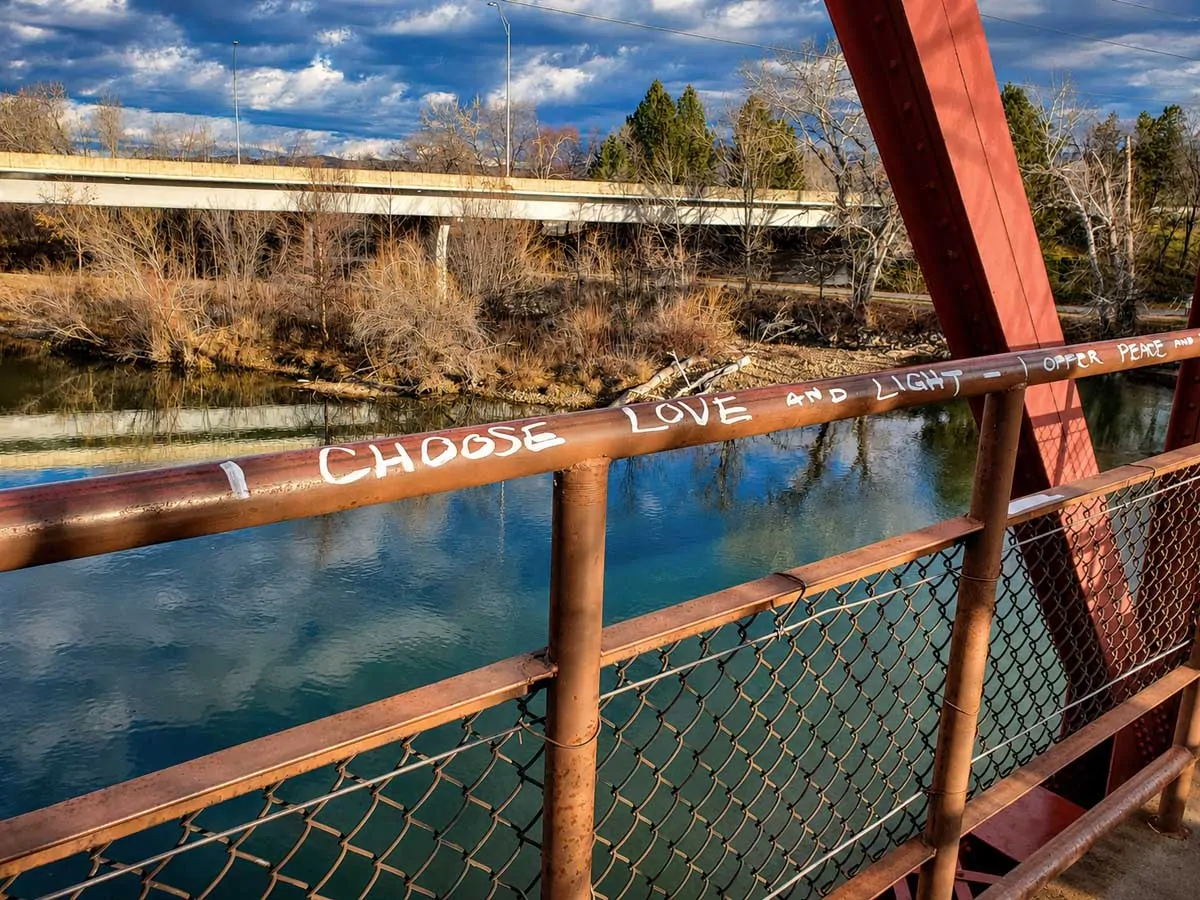
It would be easy to shrug these off as a local quirk. A little chalk. A painted rock. A sticker someone put where it probably wasn’t supposed to go. But when the same kind of message keeps appearing in different places, it starts to say something about the place. People here are still trying to care for strangers in public. Someone sees a hard stretch of concrete and decides the next person who passes by should receive a little encouragement.
A painted rock by a trail is different from someone tagging a wall or damaging public property. A city still has to maintain its bridges, signs, benches, paths, and shared surfaces. Standards matter because public places belong to everyone. But a mature community should know how to read the difference between damage and a gesture of goodwill. Some marks degrade a place. Others show that people are trying, however imperfectly, to make a public surface feel less abandoned and more human.
Those small messages are limited. They cannot fix the street, plant shade trees, make a crossing safer, or give a neighborhood a real public room. But they can show what people are still reaching for. They want the public world to feel less anonymous. They want some small sign that the person coming after them is worth encouraging.
The harder truth is that people often have few good ways to express this impulse in public. Most public space is built for movement, commerce, rules, or maintenance. It gives people places to pass through, buy something, sit briefly, or keep moving. It rarely gives them a simple, accepted way to encourage the next person who comes along.
Boise Rising is interested in the generosity behind these small gestures, and in the kind of city that would give that care a better place to live. A healthier Boise would make encouragement easier to practice in ordinary public life: through better places to gather, better paths to return to, and simple rituals that help people feel responsible for one another.
Sometimes a few words beside the path are enough to show what people are still trying to give each other.
The task is to build a city worthy of that message.
