
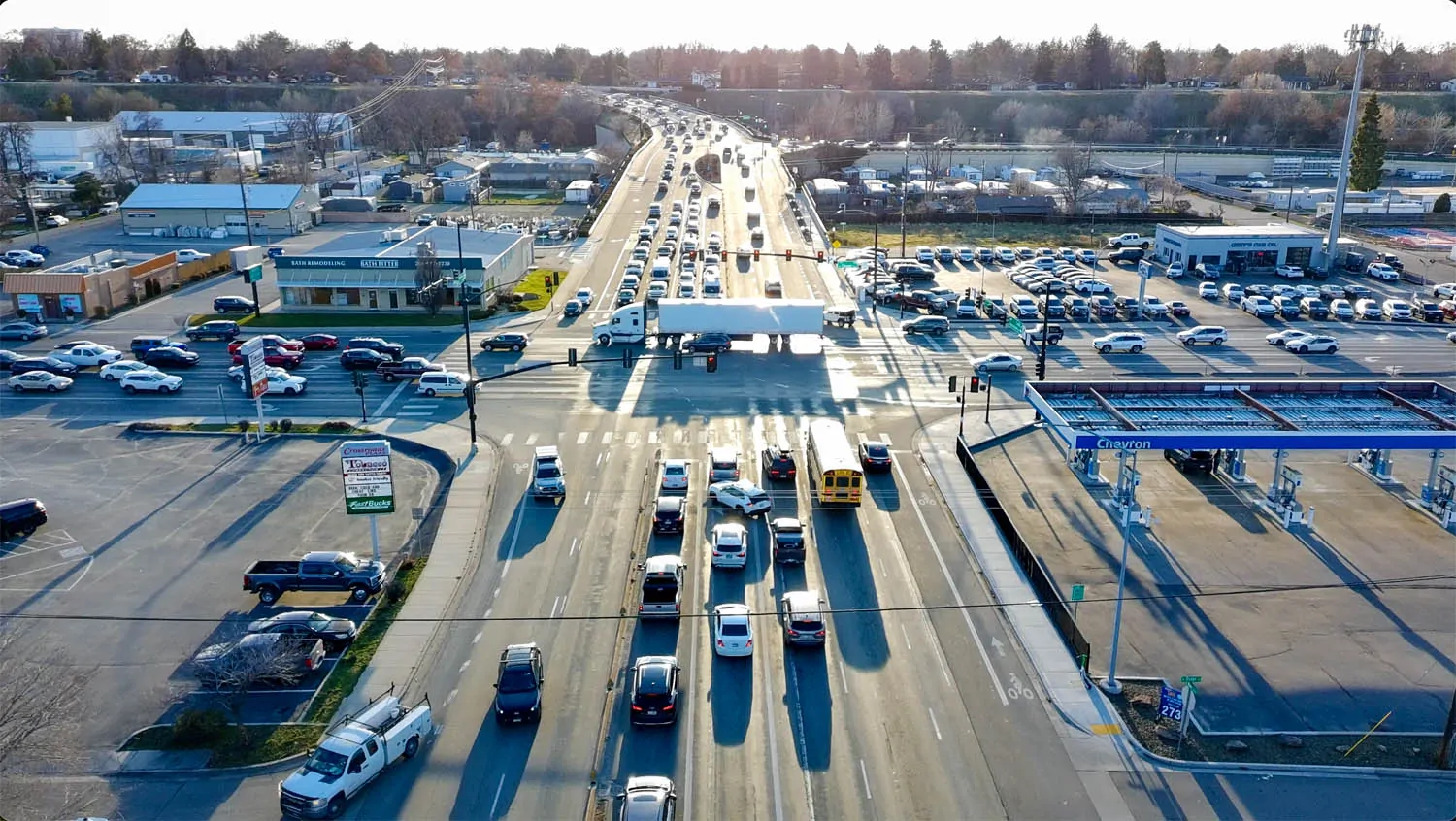
We take it for granted, but driving across a modern city is a form of teleportation. You sit in a climate-controlled box, listen to a podcast, and move from one side of Boise to the other in twenty minutes. You are effectively bypassing the world. The hills, the trees, the shops, and the people on the sidewalk are just a blur outside the glass. You arrive at your destination without having actually been anywhere in between.
It is physical magic. It grants us a power that the human body was never designed to have: the ability to cover vast distances without effort. But like all magic in old stories, this shortcut comes with a hidden cost.
There is a classic example of this trade in the story of Jack and the Beanstalk. We usually focus on the wrong part of the plot—the giant in the clouds and the rhyming, ominous chant of the monster. We remember the treasure. But the real engine of the story is the plant itself and the bargain Jack makes to get it.
Jack starts with a cow, which is a slow, productive, grounded animal that belongs to the world of the farm. He trades that living reality for a handful of magic beans. It’s a gamble on a shortcut. The beans promise him that he can bypass the dirt and the seasons and go straight to the sky.
In a real garden, things grow through struggle. A tree has to push against the soil and survive the wind; it has to grow deep roots before it ever tries to reach for the sun. The wood is a record of that patience.
The beanstalk ignores all of that. It grows overnight. It offers Jack a way to skip the slow work of the garden and go straight to the realm of giants. A world of massive scale that he hasn’t earned and isn’t prepared to handle. The beanstalk has height, but it has no depth. It is a weed that has been inflated to the size of a skyscraper. It has the reach of a giant, but it cannot hold the weight of a community.
For the last fifty years, we have been planting these same magic beans in our cities. Our high-speed roads and arterials are our beanstalks. They are built to move us as fast as possible, skipping over the friction of real neighborhoods. They allow us to have a destination without having to inhabit the landscape. We have grown our city to a massive scale, but we have done it by bypassing the very things that make a place feel like a home.
When a city grows like a beanstalk, it starts to feel hollow. You see this on any major commercial road lined with strip malls and parking lots. Everything looks the same because everything was built for speed rather than for staying. There are no porches where neighbors can greet each other. There are no narrow sidewalks where you might stop to talk. There is only the blur.
On these high-speed roads, the world becomes interchangeable. You could be in Boise, or Phoenix, or Atlanta. When we move that fast, we stop being citizens and start being passengers. We lose the roots of local knowledge and neighborhood connection. We gain the ability to go anywhere, but we lose the feeling of being somewhere specific. We have grown tall, but our foundation is shallow.
Technology and transit are tools we need to move and grow. The danger is when those tools are used to bypass the human scale entirely. A street should be more than a pipe for traffic. It should be a place that teaches us how to live together.
A well-tuned street forces us to slow down just enough to notice the world. It uses trees, narrow lanes, and front doors to reintroduce a little bit of friction back into our lives. This friction is what roots us. It turns a commute back into a journey. It ensures that our reach doesn’t exceed our responsibility.
The choice between progress and the past is a false one. A city can expand its reach while deepening its roots. We have the capacity to grow in a way that protects our ‘cows’—the grounded, productive parts of our community—rather than trading them for magic shortcuts that fail to hold our weight.
Boise Rising is about building a city that fits the human spirit. We want to find the point where growth is rooted and where the foundations of our community are strong enough to last a hundred years. We should build our streets as if we actually intend to inhabit them, rather than just drive through them. We are building for the long haul.
