
On any given morning, millions of adults slide small plastic nodes into their ears to listen to someone repeat the obvious. They sit in slow-moving traffic or stand over kitchen sinks, nodding along as a voice counts down a list of basic adult obligations. Take responsibility for your own life. Tell the truth, or at least do not lie. Set clear boundaries with people who drain you. Accept that some problems will never be solved, and treat the small handful of people who actually matter with deliberate care.
There is a strange, undeniable sense of relief in hearing these principles spoken aloud with quiet conviction. None of these insights are exotic. They contain no hidden secrets and no newly discovered psychological data. They are the baseline rules of functional adulthood, the exact kind of orientation that a culture is supposed to embed into its people long before they reach maturity. Yet when these plain facts are read aloud on a podcast or clipped into a short video, they are received with the intensity of a revelation.
That reaction reveals something worth taking seriously. Information is cheap and abundant, yet people remain disoriented. The modern world offers an endless overflow of advice, while people remain hungry for contact with truths sturdy enough to survive the friction of ordinary life. The power of these moments comes from recognition. Something ordinary has been spoken clearly, and the listener feels, for a moment, returned to solid ground.
This behavior points to a shift in how people are trying to stay sane. The surrounding culture rewards a relentless pursuit of the new, generating fresh insights, productivity hacks, and emotional vocabularies every week. We are trained to look for the missing concept that will finally unlock our habits or steady our relationships. But the popularity of these basic, repetitive audio clips suggests a different diagnosis. The difficulty of modern life rarely comes from an absence of knowledge. Most people already know many of the things they ought to do. The fatigue comes from the immense mental effort required to keep those basic truths in front of their eyes once the day actually begins.
This instability is built into human life. Insight is fragile. A person can wake with real clarity, then watch it dissolve by noon under the weight of a difficult email, a domestic conflict, a financial worry, or an unexpected surge of anxiety. Under pressure, attention narrows. The body defends itself. The mind reaches for whatever response has been rehearsed most often. Long-term principles may still be believed, but they become hard to reach.
This is why people rarely rise to the level of their best insight when life becomes difficult. They return to what has been practiced.
Older cultures understood this weakness. They did not leave their deepest truths to private memory alone. They built rhythms that brought people back. Calendars marked sacred days and civic seasons. Meals gathered families around the same table. Songs carried inherited memory in a form the body could remember. Ceremonies placed suffering, gratitude, obligation, and repair inside a repeated public form. Buildings, thresholds, bells, and processions gave ordinary life moments of return.
These forms worked because they respected human limits. They assumed that people forget, drift, defend, and lose contact with what they know. A truth encountered once remains a concept. A truth returned to by rhythm, place, and shared practice becomes a pattern. Wisdom has to be rehearsed before it can be relied upon.
As these older rhythms have weakened, many people have turned to media for the work of return. They return to the same digital voices each week because those voices offer a predictable source of orientation. The rapid growth of the personal-growth world is a rational response to a culture that has lost many of its older containers of moral memory. Podcasts, newsletters, video clips, books, and therapeutic language are doing real work. They provide boundaries, encouragement, vocabulary, and reminders that many people no longer receive from families, neighborhoods, workplaces, religious institutions, or civic life.
This digital ecosystem operates under a strange constraint. To hold attention inside a crowded media environment, writers and speakers have to wrap durable human truths in some layer of novelty. They invent new terminology, frameworks, stories, and productivity systems in order to return people to the same baseline principles. The algorithm rewards newness, while the person listening often needs repetition. Much of modern media is built around that tension: novelty becomes the delivery mechanism for return.
This reveals the limitation. Media can remind the mind, but it cannot house the life. A person can spend an hour listening to a clear defense of responsibility, presence, or truth-telling, then spend the rest of the day moving through environments that train the opposite behavior. The earbud can restore orientation for a brief moment, but it remains an isolated, internal event. Once the track ends, the individual returns to a physical world with no structure for carrying what they just heard.
The physical world repeats itself without asking for attention. A person may choose what to read, what to watch, or which voice to hear through an earbud, but the city is encountered by simply moving through the day. Its lessons arrive through scale, distance, noise, thresholds, rooms, streets, crossings, and the ordinary ease or difficulty of contact with other people.
This makes the built environment the most powerful spaced-repetition system in human life. Every day, it teaches through form.
When a place is built with care, it becomes a continuous reminder of what matters. A walkable street reminds people that life is shared. A genuine public square reminds a community that collective attention has weight. A dignified home reminds its inhabitants that rest and privacy are real conditions, not earned luxuries. A well-designed threshold reminds people that public life and private life both possess dignity. Even a beautiful, permanent landmark reminds a city that some things deserve protection across generations.
A degraded environment repeats another set of lessons. Sprawl trains the mind toward sameness and isolation, making neighbors look irrelevant. Thin walls and exposed housing train the body into defensive vigilance. Dead public spaces teach withdrawal. High-speed traffic corridors teach speed over presence. Placeless commercial strips teach consumption without belonging. Fragmented civic systems teach helplessness.
The environment wins because it has the benefit of repetition. A person can absorb exceptional advice in the morning, but if the rest of the day requires navigating environments that demand hurry, anxiety, isolation, and suspicion, private insight is forced to fight the surrounding world.
For a generation, our culture has worked hard on the inner life. We have invested in therapy, habits, mindfulness, personal growth, and emotional vocabulary. Much of that work has been necessary and useful. At the same time, the outer forms of civic life have deteriorated. The neighborhoods, civic rooms, public thresholds, and shared rhythms that once helped wisdom become ordinary have been neglected. The result is a culture full of insight and short on forms.
When these forms become the baseline layout of daily life, the city begins to work like a forgetting machine. The damage rarely arrives through a single grand design. It accumulates through friction repeated so often that people stop noticing what it is teaching them.
Consider the ordinary shape of a contemporary afternoon. The long commute turns neighbors into abstractions, or into obstacles changing lanes ahead of us. The commercial strip is arranged for rapid consumption, giving the body no reason to linger, converse, or settle. The hostile multi-lane arterial makes a simple walk to the park feel like an act of defiance.
Even civic spaces participate in the lesson. The typical municipal meeting room, with fluorescent lighting, fixed rows, bad acoustics, and sterile design, rarely supports shared perception or collective focus. It is built to be endured. It teaches the citizen to perform an opinion or passively wait out the clock, rather than participate in serious public judgment.
These are daily lessons. They ask individuals to manufacture meaning, stability, and self-command in environments that offer little support in return. When the public world repeatedly reinforces hurry, isolation, and suspicion, remembering how to live becomes an exhausting private task. The individual is left carrying a weight that a healthier civilization would help carry.
A healthier city helps carry that weight by giving wisdom a physical form. It does this through the ordinary structures that hold human life: places people can inhabit, stories they can recognize, rituals they can return to, and systems that protect those forms over time.
Place gives wisdom a visible world. Story gives it direction. Ritual gives it repetition. Stewardship gives it durability. When these layers work together, wisdom moves past the screen and enters the shared path of life.
This work does not require a utopian reconstruction of the city. It begins with deliberate attention to ordinary containers. A family dinner requires a table. A neighborhood requires legible thresholds between public obligation and private rest. A community requires shared spaces where return becomes natural. A serious civic culture requires rooms that support collective focus rather than performance. Wisdom becomes durable when it is built into the ordinary path of life.
This is where civic design becomes more than aesthetics or logistics. A dedicated public room, whether a design studio, neighborhood forum, or civic gathering place, can help collective attention return. It can remind citizens that the city deserves clear seeing, that complaint is weaker than judgment, and that responsibility becomes more real when people are gathered around the same condition. A city that never gathers seriously will eventually forget how to see itself.
People will always need private practices. Books, earbuds, therapy, friendship, prayer, exercise, and personal discipline all have a place in human development. They help people recover clarity, return to what matters, and keep themselves steady when life becomes difficult.
A mature culture gives those practices a world that supports them. It does not leave orientation to private willpower alone. It shapes paths, rooms, thresholds, and neighborhoods so that return becomes easier to practice in daily life. It builds a public realm that helps people remember their bodies, their limits, their neighbors, and their place inside a longer story.
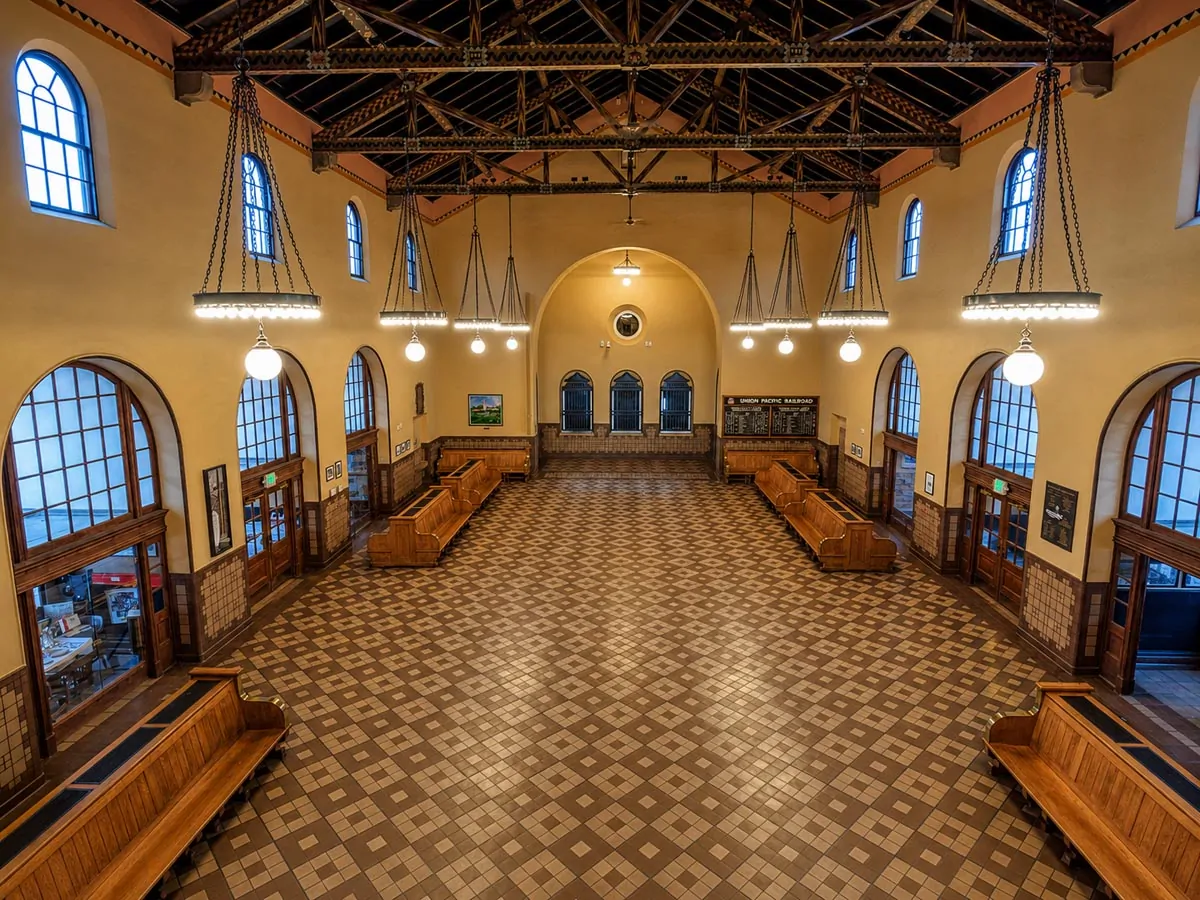
This is part of the task ahead for Boise. The city still has the human scale, cultural character, and physical room to build these forms before growth hardens into habits that become difficult to change. Boise can still build thresholds that welcome the surrounding neighborhood, rooms that hold collective attention, and paths that finish their thoughts on the ground.
The responsibility is to give the truths we already know a durable physical home. A civilization is wise because it builds places, rituals, and systems that help people remember the truth when life becomes difficult.
The work is to build a city that remembers, so its people are not forced to remember alone.
