
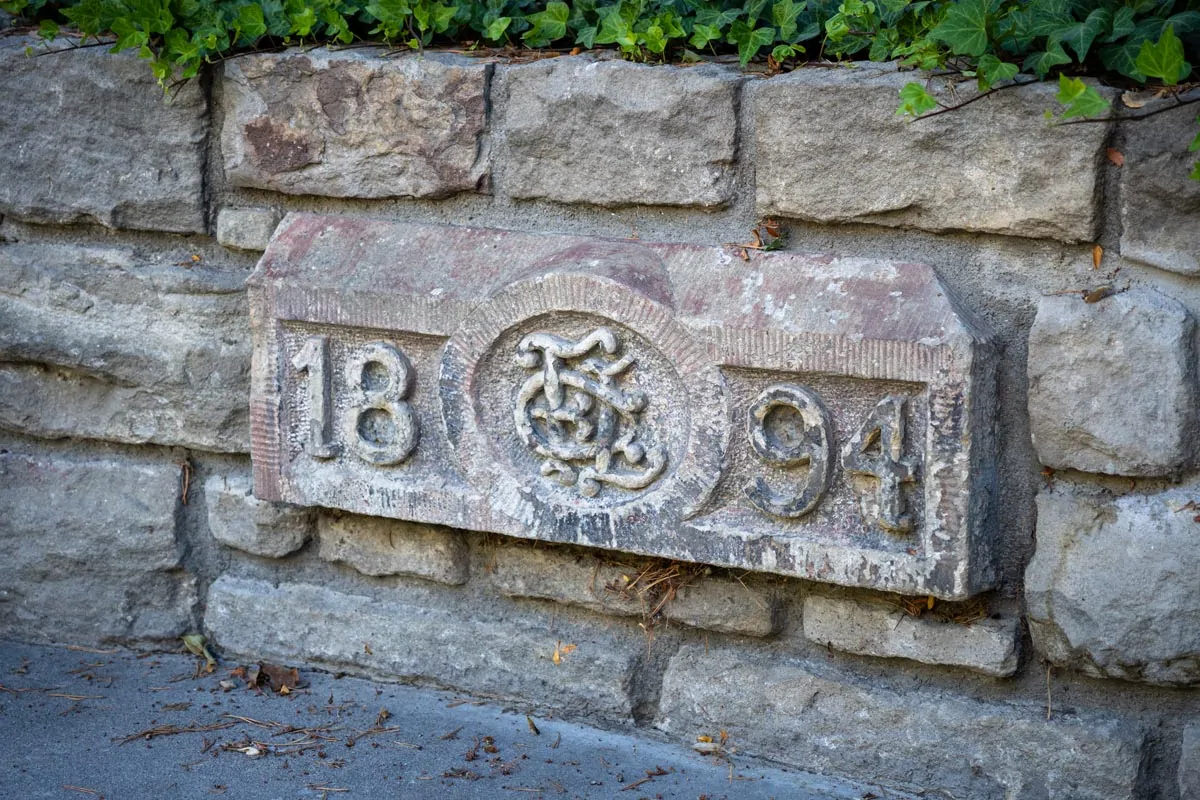
On Grove Street, between 3rd and 4th, a bronze plaque marks the baseline of this city with unvarnished plainness. Settling the Boise Valley was an enormous gamble. The region was isolated by hundreds of miles of sagebrush, lacking railroads or navigable rivers to steady its supply lines, and exposed entirely to the erratic mercy of drought and flood.
In 1862, gold discoveries in the Boise Basin drew miners, merchants, farmers, and families into a valley long inhabited by Shoshone, Bannock, and Northern Paiute people. The newcomers faced distant supply lines, uncertain crops, severe weather, and no guarantee that the mining boom would last. They came anyway, staking their futures on the possibility that a permanent settlement could take hold here.
They won that gamble, and we live inside their winnings.
We walk down paved avenues, flick switches connected to distant dams, and drink coffee in historic brick storefronts erected by men and women who risked their lives on the outcome. But somewhere between the first stake driven into the valley floor and the well-managed present, the psychology of the city inverted. As Boise became safer, wealthier, and more predictable, protecting what had already been built became easier to justify than attempting something unfamiliar.
John S. Gray arrived in the territory during the gold rush, but chose to build a permanent home rather than take his earnings and leave. Gray remained in Boise, served as territorial treasurer, later helped revise Idaho’s statutes, and represented Ada County at the 1889 constitutional convention. The original wager was an investment in civic permanence. Men and women accepted physical isolation and economic instability specifically to construct a framework where their successors could author something lasting.
Over the following century, that framework succeeded. Boise developed steady commerce, reliable irrigation networks, and predictable neighborhoods. Yet as the city stabilized, many of the systems surrounding development became exceptionally good at rewarding predictability. Public bodies, planning departments, lenders, insurers, and builders each have legitimate reasons to prefer what can be understood, priced, and approved in advance.
Walk through the expanding corridors of the city today and this protective calculus is visible in the physical landscape. Developers repeat familiar building types, materials, and layouts because familiar projects are easier to price, finance, approve, and construct. Public initiatives can spend years in feasibility studies, public review, and risk analysis before anything reaches the ground.
This caution comes from a rational human impulse. When a community secures clean streets, reliable utilities, and high property values, an unfamiliar approach can look like a threat to existing comfort. Citizens and local officials naturally protect what they have already won. When preservation becomes the dominant virtue, a city begins to coast on the momentum of past audacity. It replaces local imagination with generic formulas, until new neighborhoods begin to resemble approved compromises from somewhere else.
A foundation exists to support new construction. When early residents established irrigation systems, surveyed the street grid, and chartered public institutions, they created a platform that could support future ambition. Each success removed some of the raw survival risk and gave succeeding generations greater room for higher-order gambles in civic design, durable architecture, and community life.
Stability can breed a managerial mindset. A city begins to treat its physical and social fabric as a trust fund, spending down accumulated capital without adding new principal. We inhabit the shade of a hundred-year-old urban canopy and admire historic sandstone facades, yet we hesitate to commission public works of comparable permanence. We protect the historic core while surrounding it with disposable commercial strips, treating the audacity of the founders as an unrepeatable historical chapter instead of an enduring standard.
The cost of this posture is subtle but compounding. A generation concentrated on preserving what already exists gradually gives up some of its capacity for authorship. The next generation receives maintained assets, but fewer distinctive additions of its own.
The valley is settled and subdivided, while the civic landscape still offers room for deliberate construction. The modern gamble is using the security we have accumulated to author institutions, spaces, and neighborhoods that belong specifically to this place.
That wager takes concrete shapes. A builder risks capital on masonry, courtyard layouts, and human-scale shopfronts instead of copying a standardized regional template. A group of neighbors works with an owner or public partner to turn an untended parcel into shade trees and a shared commons. Entrepreneurs root their businesses in the character of the street, tying their reputations to the longevity of the district.
These choices carry genuine friction. They demand personal liability, administrative persistence, and the willingness to accept uneven outcomes. Taking on that friction gives residents a direct hand in the long work of building the city around them.
Boise is again absorbing rapid population growth, investment, and national attention. The path of least resistance is well marked. The valley can absorb that momentum through standard subdivisions, franchise architecture, and widened corridors, maintaining a comfortable veneer while surrendering its physical character to national averages.
That growth can become raw material for intentional civic craft: durable materials, shared courtyards and walkable lanes, locally recognizable building patterns, and civic institutions built with time horizons measured in generations.
The early settlers calculated provisions, organized irrigation cooperatives, and laid out an orderly grid with deliberate discipline. They accepted physical hardship to establish a permanent home in the desert. The generations that followed added roads, utilities, capital, law, and public institutions, steadily widening what people here could safely attempt.
Boise now has room to make choices those early residents could scarcely imagine: to invest capital, reputation, judgment, and sustained labor in buildings, public spaces, neighborhoods, and civic institutions meant to outlast the people who begin them. The plaque on Grove Street records the uncertainty at the city’s beginning. The enormous gamble now is what we choose to build on that foundation.
