
The Living Remnant
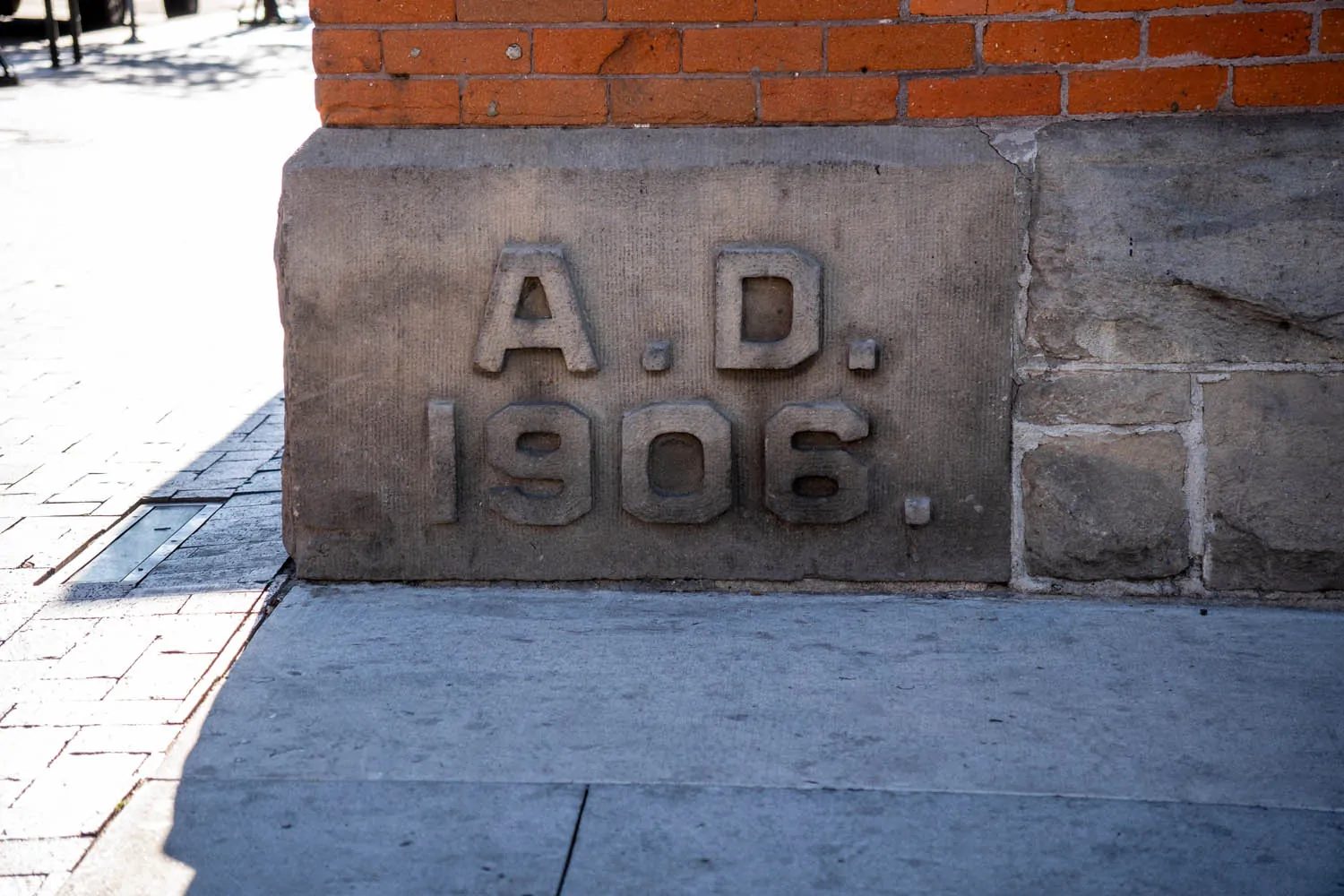
Every growing city has a few old structures that become more than infrastructure. Along the older neighborhood edges of the Boise Valley, some of them are still there beneath the asphalt grid: hand-dug rock irrigation laterals, weathered canal lines, and century-old basalt foundations anchoring corner lots.
These structures are hard to romanticize once you look closely. They were built because someone had to solve a real problem in real ground. Water had to move. A corner had to stand. A wall had to survive frost, heat, settling soil, and time. The work depended on grade, stone, timber, tools, weather, and judgment. Reality gave immediate feedback. It either functioned or it failed.
These remnants should be treated as more than old local color. They are evidence of a working culture. The people who made them had to understand slope, soil, water, frost, load, and repair. A small mistake had consequences. Water pooled where it was supposed to move. A wall cracked. A foundation shifted. Their limits were material, immediate, and unforgiving, and those limits trained a kind of judgment modern life has made easier to avoid.
To look closely at these stone lines is to recognize a simple, uncomfortable truth: this valley was built by people who had to answer to reality directly. They made water move, made corners stand, made roads connect, and left behind the working ground of the city we now inhabit.
The Great Inversion
It is possible to live in the middle of that inheritance for a lifetime without being asked to practice it.
That is part of the strange condition of modern Boise. The old structures still run through the valley, but the habits that made them possible are no longer the default. A person can spend years inside meetings, permitting processes, funding cycles, and professional systems where the main question is rarely whether the work will strengthen the place. The question is whether the risk has been managed, the process has been followed, the language has been softened, and the responsibility has been spread thin enough that no one person can be blamed.
The older culture had to answer to the ground. The newer one often answers to the file.
This shift changes what a city rewards. The person trying to fix a broken lot, repair a neglected edge, open a useful space, or build something that will last often runs into a wall of process before the work can even be judged on its merits. The first response is rarely, “Will this strengthen the place?” More often, the question becomes, “Who approved this? What category does it fit? What liability does it create? Which process has to absorb it?”
Over time, a different civic role becomes normal: the administrator of decline. This is the person skilled at managing an existing condition without improving it. They know how to move through process, reduce liability, explain constraints, and preserve institutional comfort. Some of that work is necessary. Cities need rules, records, permits, and review. But when procedure becomes the highest standard, decline can be managed indefinitely while improvement is treated as the disruption.
The consequence is a public world that feels increasingly disposable. Buildings go up faster and seem to age sooner. Materials get lighter. Edges receive less care. Places are expected to satisfy a financing cycle instead of earning affection across generations. At the same time, the systems around the work become more elaborate: longer memos, cleaner presentations, thicker review packets, and more careful language. The person who can manage that machinery is treated as responsible. The person asking whether the work will actually make the city stronger is often treated as naïve, expensive, or difficult.
Living Beneath the Inheritance
People can feel this inversion before they have language for it.
It shows up in ordinary professional and civic life. A person sits through a long meeting, watches a useful piece of land move toward an uninspired design, or reads a policy that manages every procedural concern while avoiding the real condition everyone can see. The process is called successful because the forms are complete and no rule has been openly violated. Yet the result feels evasive. Everyone has spent hours moving around the problem instead of taking responsibility for it. People leave with a mix of irritation and embarrassment because the system has asked them to accept an outcome they know is beneath the standard the city should hold.
That restlessness comes from a real mismatch between people and the systems around them. Most people still expect their effort to matter. They want their work to improve something visible. They want to feel responsible for the street, school, workplace, neighborhood, or institution they are part of. But many modern systems ask for a much smaller version of the person. They ask people to follow procedure, reduce exposure, manage language, avoid blame, and keep the machinery moving. A population capable of building begins to feel underused when it is trained mainly to process, comply, and adapt.
The culture around them usually answers that restlessness with distraction and smaller expectations. People are pushed toward personal optimization, consumer escape, online complaint, and a narrow version of reasonableness that mostly means accepting the limits handed to them. They learn to assume the important decisions belong to distant systems, and that their job is to adjust to whatever remains.
The desire to build is still present in the valley, but modern public life gives it fewer places to go. People hear, year after year, that every meaningful improvement is too complicated, too expensive, too risky, or too constrained to attempt. Eventually caution begins to feel like wisdom. But the city they inherited was made by ordinary people with fewer tools, fewer resources, and a much stronger expectation that they were responsible for shaping the world in front of them.
Reframing the Frontier
The frustration can retreat into a shallow version of nostalgia. When modern public life feels over-managed, people reach for familiar Western images of the lone rider, the self-made man, and the pioneer who answers to no one.
Those images are powerful, but they leave out the infrastructure of survival. A person could be independent in temperament, while daily life still depended on roads, water, tools, neighbors, contracts, churches, stores, schools, irrigation systems, and a shared willingness to do hard things in common.
The people who dug irrigation laterals and laid stone foundations in early Boise depended on one another because the valley required it. Water had to be coordinated. Roads, fences, homes, stores, and schools had to work as part of a shared settlement. One careless decision could send water to the wrong place, expose a neighbor to loss, or weaken the whole pattern.
The frontier concentrated responsibility. Freedom meant accepting the work required to keep a fragile settlement alive. In an arid valley, bad judgment became physical quickly. Water missed the field. Roads broke down. Fire found weak edges. A careless threshold exposed the next household to disorder. The world stayed livable because people moved water, repaired roads, cleared passages, and cared for the small boundaries where private life met the common world.
This is the inheritance worth recovering. The frontier demanded ordinary people who could make a place livable together. Water, shelter, roads, fields, schools, and trust appeared through coordinated work, practical judgment, and more than private courage.
Modern Western nostalgia often avoids that harder lesson. It can borrow the image of independence while leaving the work of repair untouched. Complaint, branding, and political theater become substitutes for fixing the road, improving the building, tending the edge, and shaping the next common thing well. The stronger inheritance is more practical: look at the ground in front of you, see what needs to work, and take responsibility for making it work.
The Return to Conduct
A mature city looks for its history in the standards it practices now. Archives, plaques, and old buildings matter because they sharpen present responsibility. They remind a city how earlier generations dealt with water, weather, money, conflict, and time.
Remembrance is a discipline of conduct. Boise honors the builders of the valley by practicing their orientation toward reality in the conditions now in front of us: plain speech, durable work, repair, restraint, and responsibility for the physical form of shared life. The past becomes useful when it changes how we build, maintain, decide, and care.
That choice requires a different kind of public language. A city has to quit hiding weak outcomes behind the protective language of process. If a design is uninspired, say so. If a street corner leaves people exposed to heat, speed, and danger, say so. If a layout makes daily life harder, say so. Approval may close the file, but it does not settle the question of whether the city has been served.
This is the work Boise Rising is trying to make legible. Civic trust becomes real through things people can see, use, repair, and inherit. It is built into streets that function, buildings that age well, public spaces that invite care, and institutions that tell the truth about the people they serve. The valley needs more people willing to step past inherited limits and take up the slower work of improvement: repairing what has been neglected, raising the standard where it has fallen, and building places, practices, and institutions that deserve trust over time.
The capacity to shape this city is still present in the valley. It is in the people sitting through long meetings, driving past empty lots, noticing neglected corners, and knowing some part of the public world could be better than it is. What has weakened is the public habit of using that capacity. Too many people have been trained to wait for permission before caring for the ground beneath their own feet.
That permission does not need to come from a distant system. We inherit a valley shaped by people who looked at sagebrush, heat, distance, and dry ground and made water move. They laid stone, cut roads, planted fields, and formed a city because the alternative was leaving the world untouched. The work now belongs to those willing to take it up again.
We remember who we are by using that capacity again. The modern world has asked too little of us for too long. Boise can ask more, and build accordingly.
