
At the end of a block party, the last folding table goes back into a garage. Someone collects the traffic cones, cars return to the street, and the patch of asphalt where children had been playing becomes a place to cross carefully. Before heading home, a neighbor says they should do this again.
Getting to that promise took weeks. Somebody found a date, asked about food, borrowed tables, and knocked on the doors of people who never joined the group chat. The neighbor known mostly by a pickup truck in the driveway turned out to have a funny story and a child the same age as yours. People stayed longer than they had intended.
The following evening, those households are still beside one another. The chairs are behind fences, though, and the street has resumed carrying traffic. There may be nowhere to stop except at someone’s front door, which would mean deciding to visit. The easy company of the afternoon has become something to arrange. To do it again, someone has to start asking about dates.
The neighbors want to keep what they found that afternoon. They still live a few yards apart. Why does community on this block have to keep making an appointment?
The tables had helped turn the street into a common room. Children could move between houses while adults stood in view of one another. A conversation could widen to include whoever happened to pass. The invitation made it clear that lingering was welcome. For an afternoon, the space between the houses belonged to an activity the neighbors shared.
On an ordinary day, that same block might serve each household almost entirely through private space. A car makes the trip from work to the garage. Dinner happens indoors; a comfortable evening outside happens in the backyard. Shopping and recreation require another trip away. Two families can follow nearly identical routines a few yards apart and scarcely encounter each other.
Privacy and convenience are worth having. A tired parent should be able to bring in groceries without being drawn into a conversation. Across the whole block, however, arrangements that serve each household separately can leave very little ground in common. If every comfortable seat is behind a fence and the nearest errand begins with car keys, meeting a neighbor takes a separate effort.
To overcome that separation, the block party gathers everything in one place and time. Volunteers provide the furniture, the food, the reason to come outside, and the assurance that other people will be there. The party is doing work the block leaves undone. When the event ends, the arrangement that helped people find one another is dismantled.
Where a neighborhood depends on that arrangement for almost all its common life, community becomes another commitment to fit into the calendar. Residents must reserve an afternoon, arrive ready to socialize, and hope the people they want to know can attend. A shift worker misses the gathering. A newcomer hesitates to walk into a crowd alone. Moving the date may help one household and exclude another. The invitation can be open to everyone while the occasion remains difficult for many to use.
The organizer keeps trying to solve these problems. Another reminder goes out; another date gets proposed. If that person takes a demanding job, becomes ill, or moves away, the tradition can disappear. The neighbors may still want a community. They have lost the person who kept assembling it.
Hold the party every week, and there is still a host, a start time, and the expectation of being good company. On many days, all a resident can spare is a greeting on the way home. For community to have a place on those days, a resident needs to be able to join in for a few minutes and leave.
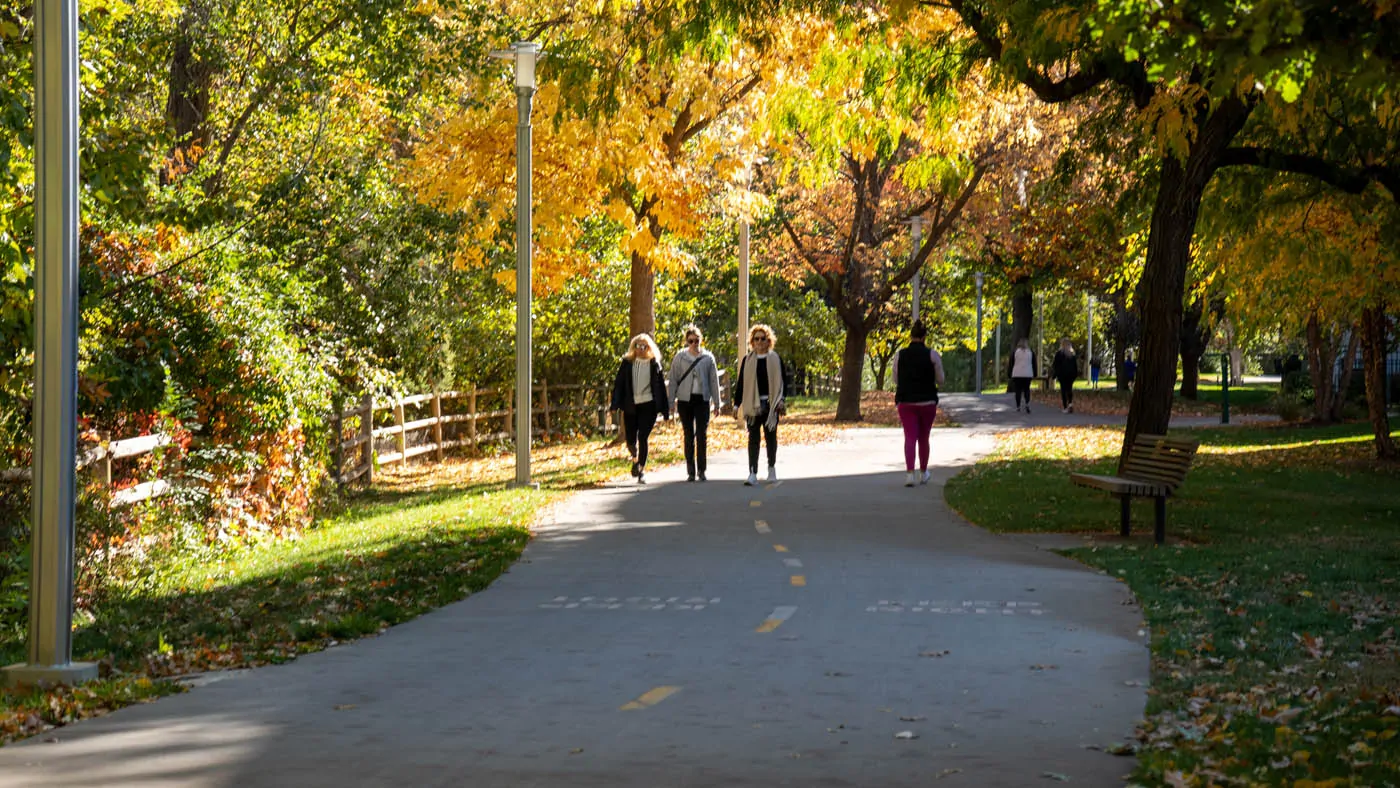
Two neighbors on the same school route can begin with a hello and keep walking. On another morning, one mentions that a child is sick. The next day, the other asks how she is doing. A neighbor on a porch beside that route can join the conversation. In a small courtyard on the way home, an exchange can last thirty seconds or five minutes. Neither person has to commit a free evening to finding out whether they like the other.
Those small encounters leave a history behind. People learn names, which children belong to which household, and enough about one another to notice when something is off. A neighbor who already knows a child has been sick can offer help without appearing out of nowhere. Familiarity makes a need easier to recognize and an offer of help easier to make.
A community also has to get through the days when its members are difficult. A car is left across the sidewalk, a parent with a stroller has to go around it, and a complaint gets a sharp reply. In a neighborhood where the households seldom meet, the parking problem can become the whole relationship. Put the argument on a neighborhood message board and people who have never spoken to either resident can join it. Their first shared fact is the infraction.
Neighbors who have spent time together have more to go on. The driver may also be the neighbor who brings an elderly resident’s trash bin back from the curb every week. The driver still needs to move the car. Knowing something else about them leaves room to address the obstruction without allowing it to become the only thing the community knows.
If the driver apologizes and begins leaving the sidewalk clear, the next several mornings give the parent with the stroller a chance to see the change. Grace in a neighborhood is usually practical. Making amends takes repeated conduct, and the people affected need opportunities to see it. When community appears mainly as a scheduled gathering, those opportunities can be scarce. The old complaint may remain easy to find long after the behavior has changed.
Daily contact can also sustain gossip and long-running feuds. A common courtyard can become a place people dread crossing. Residents need the freedom to pass without stopping and somewhere private to withdraw. They still decide whether to forgive. The neighborhood can make a further encounter possible without deciding its outcome.
The relationships a block party begins need places to continue. Boise’s builders and planners should be able to explain who would use a proposed common space on a day with nothing scheduled.
A courtyard, garden, or shaded seat earns its ground when it sits inside a route people already use: between front doors and the street, beside the walk to school, or on the way to a nearby shop. Ordinary life should bring people through it without an organizer having to invent a reason.
Existing neighborhoods have the same opportunities at a smaller scale. A missing crossing, an uncomfortable path, or a bus stop with nowhere to sit can keep nearby households from sharing much of daily life. Improving one such place can give neighbors another reason to be within reach of one another.
The block party still deserves its place in that life. People can look forward to preparing a meal together, bringing out the tables, and spending longer with neighbors they usually see in passing. A newcomer arrives among faces already becoming familiar. Children resume games they have been playing all year. The occasion lets neighbors spend longer together than the ordinary encounters that carried them through the year.
At the end of the night, the tables will go back into storage. A block party should celebrate a community that has somewhere to live the rest of the year.
